
Women’s Clothing Size Chart
Finding the right women’s clothing size across different regions can be confusing — a UK 12 is a US 8, an EU 40, and an Australian 12. Our comprehensive conversion chart helps you navigate these differences so you can shop confidently from any brand or country. Whether you’re buying dresses, tops, trousers, or outerwear, accurate body measurements are the key to getting a great fit.
Sizes can also vary between brands, so always check the specific brand’s size guide alongside this chart. Below you’ll find general conversion tables, measurement instructions, and expert fitting tips.
Women’s General Clothing Sizes
This chart covers standard women’s clothing sizes. Measurements are in inches and represent body measurements, not garment measurements. Always measure yourself and compare to these figures rather than relying on the size label alone.
| UK | US | EU | AU | International | Bust (inches) | Waist (inches) | Hips (inches) |
|---|---|---|---|---|---|---|---|
| 4 | 0 | 32 | 4 | XXS | 30 | 22 | 32 |
| 6 | 2 | 34 | 6 | XS | 32 | 24 | 34 |
| 8 | 4 | 36 | 8 | S | 34 | 26 | 36 |
| 10 | 6 | 38 | 10 | S | 36 | 28 | 38 |
| 12 | 8 | 40 | 12 | M | 38 | 30 | 40 |
| 14 | 10 | 42 | 14 | M | 40 | 32 | 42 |
| 16 | 12 | 44 | 16 | L | 42 | 34 | 44 |
| 18 | 14 | 46 | 18 | L | 44 | 36 | 46 |
| 20 | 16 | 48 | 20 | XL | 46 | 38 | 48 |
| 22 | 18 | 50 | 22 | XXL | 48 | 40 | 50 |
| 24 | 20 | 52 | 24 | 3XL | 50 | 42 | 52 |
How to Measure Yourself
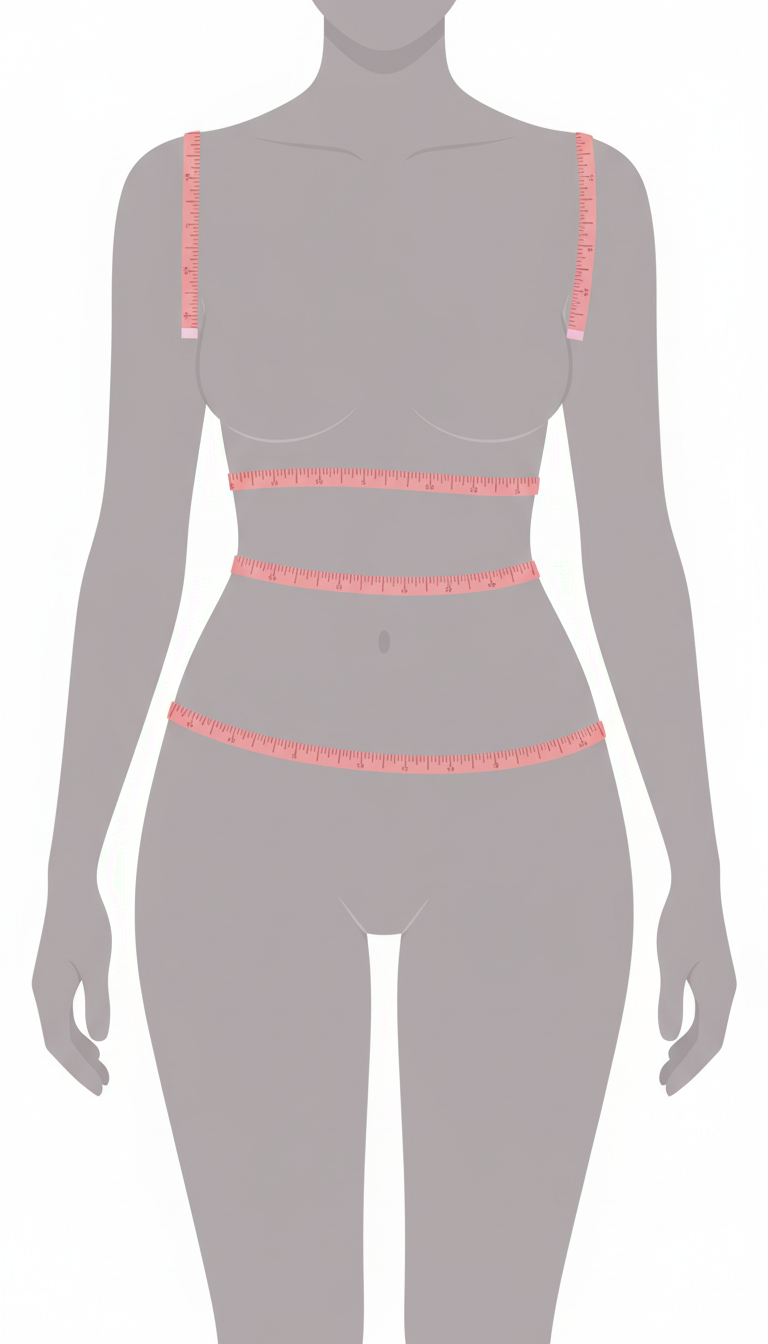
Accurate measurements are the foundation of finding the right size. Use a soft measuring tape and measure directly against your skin or over light undergarments. Stand naturally — don’t hold your breath or pull the tape too tight.
Bust
Wrap the tape around the fullest part of your bust, keeping it level across your back. The tape should be snug but not compressing. If you’re between sizes, round up for a more comfortable fit in tops and dresses.
Waist
Measure around your natural waistline — the narrowest point of your torso, typically just above the navel. Bend slightly to one side to find the crease; that’s your natural waist. Keep one finger between the tape and your body for a realistic measurement.
Hips
Stand with your feet together and measure around the fullest part of your hips and buttocks. This is usually about 20cm (8 inches) below your waistline. Keep the tape level all the way around for accuracy.
Inside Leg
For trousers and jeans, measure from the crotch seam to the desired trouser length at your ankle. It helps to measure a pair of well-fitting trousers laid flat rather than measuring your body directly.
Women’s Dress Size Chart
Dress sizing follows the same general conversion as above, but fit can vary depending on the dress style. Bodycon and fitted dresses should match your body measurements closely, while shift and A-line dresses may allow more flexibility.
| UK | US | EU | Style Notes |
|---|---|---|---|
| 6 | 2 | 34 | XS – fitted styles best for petite frames |
| 8 | 4 | 36 | S – standard slim fit |
| 10 | 6 | 38 | S/M – most common UK size |
| 12 | 8 | 40 | M – average UK size |
| 14 | 10 | 42 | M/L – comfortable regular fit |
| 16 | 12 | 44 | L – roomier in bust and hips |
| 18 | 14 | 46 | L/XL – generous fit |
Understanding International Women’s Sizes
UK to US
US women’s sizes are typically 4 sizes smaller than UK sizes. A UK 12 equals a US 8, a UK 14 equals a US 10, and so on. This rule applies consistently across most brands.
UK to EU
Add 28 to the UK size to get the approximate EU size. A UK 10 is an EU 38, a UK 14 is an EU 42. European sizes use even numbers and are consistent across most EU countries.
UK to AU
Australian women’s sizes are the same as UK sizes. A UK 12 is an AU 12. This makes shopping from Australian brands straightforward for UK buyers.
International / Letter Sizes
S, M, L sizing varies significantly between brands. A “Medium” at Zara fits differently from a “Medium” at M&S. Always check the brand’s specific measurements for letter sizes.
Women’s Sizing Tips
- Measure regularly: Body shape and size change over time — re-measure every 6–12 months for the most accurate fit
- Consider the fit style: A “relaxed fit” garment will be roomier than a “slim fit” in the same size. Check product descriptions for fit guidance
- Fabric matters: Stretchy fabrics like jersey and elastane blends are more forgiving than rigid fabrics like cotton poplin or denim
- Between sizes? Size up for structured garments (blazers, tailored trousers) and consider sizing down for stretchy knits and jersey pieces
- Read reviews: Online shoppers should check customer reviews for fit feedback — phrases like “runs small” or “true to size” are invaluable
- Petite & tall ranges: If you’re under 5’3” or over 5’8”, look for petite or tall ranges for better proportions in sleeves, hemlines, and trouser lengths
Popular Women’s Clothing Brands
Sizing varies between brands. These popular UK retailers each have their own fit profiles — check their individual size guides for the most accurate fit.