
International Shoe Size Conversion
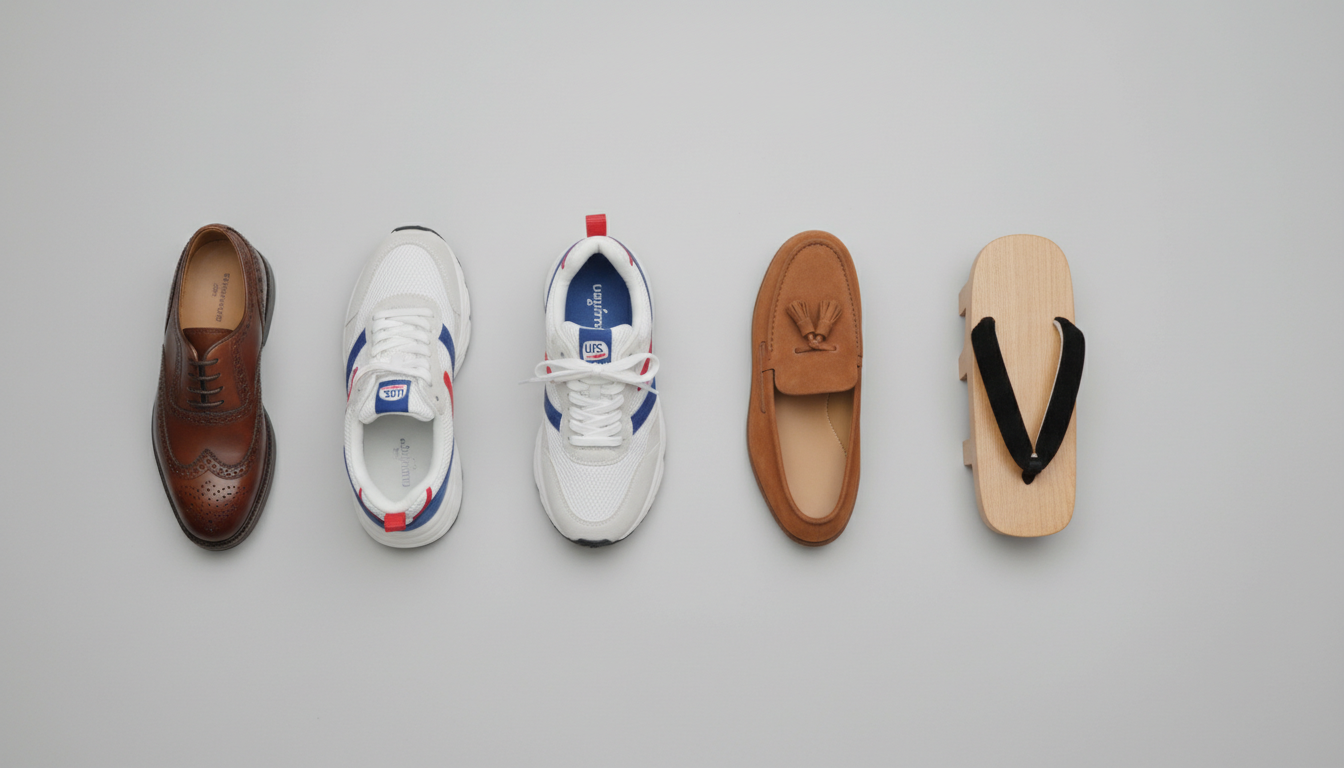
Shoe sizing systems vary around the world, and a size 8 in the UK means something very different from a size 8 in the US or Japan. This guide explains how the major international sizing systems work, how they relate to each other, and how to convert between them accurately. Whether you’re shopping from European, American, Japanese, or Australian retailers, use the conversion table below alongside your foot length in centimetres for the most reliable results.
How International Sizing Systems Work
Each country or region developed its own sizing standard, which is why conversions aren’t always a simple formula. Here’s what you need to know about each system:
UK System (British Imperial)
The UK system is based on the length of the last (the foot-shaped mould used to make shoes), measured in barleycorns — a unit equal to ⅓ of an inch (8.47 mm). UK sizing starts at size 0 for children (equivalent to a 4-inch foot) and continues sequentially. A whole UK size represents roughly 8.5 mm in foot length.
UK sizes are used throughout Britain, Ireland, and many Commonwealth countries. They are typically one full size smaller than US sizes for men, and two sizes smaller for women.
US System (American)
The American system is derived from the UK system but uses a different starting point. US men’s sizes are approximately one size larger than UK sizes (UK 8 = US 9). US women’s sizes are approximately 1.5–2 sizes larger than US men’s sizes, meaning UK 6 = US Women’s 8.
This gender split is one of the biggest sources of confusion in international shoe shopping. Always check whether a US size refers to men’s or women’s sizing.
EU / European System (Paris Point)
The European system uses the Paris Point, where each size equals ⅔ of a centimetre (6.67 mm). EU sizes are unisex — there is no separate men’s and women’s numbering. The formula is approximately: EU size = (foot length in cm + 1.5) × 1.5.
This system is used across the European Union and is increasingly adopted worldwide. Because it’s gender-neutral, it simplifies international shopping considerably.
Japanese System (Mondopoint / cm)
Japan uses the simplest system of all: shoe sizes are your foot length measured in centimetres. A size 25 means the shoe fits a 25 cm foot. This system is gender-neutral and closely related to the international Mondopoint standard used by the military and ISO.
The directness of this system makes it extremely practical. If you know your foot length in centimetres, you immediately know your Japanese size.
International Shoe Size Comparison
Use this table to convert between sizing systems. The foot length column (in cm) is the most reliable way to find your size in any system — measure your foot and match it to the nearest value.
| Foot (cm) | UK | US Men | US Women | EU | JP (cm) | AU Men | AU Women |
|---|---|---|---|---|---|---|---|
| 22.0 | 3 | 3.5 | 5 | 35.5 | 22 | 3 | 5 |
| 22.5 | 3.5 | 4 | 5.5 | 36 | 22.5 | 3.5 | 5.5 |
| 23.0 | 4 | 4.5 | 6 | 37 | 23 | 4 | 6 |
| 23.5 | 4.5 | 5 | 6.5 | 37.5 | 23.5 | 4.5 | 6.5 |
| 24.0 | 5 | 5.5 | 7 | 38 | 24 | 5 | 7 |
| 24.5 | 5.5 | 6 | 7.5 | 38.5 | 24.5 | 5.5 | 7.5 |
| 25.0 | 6 | 6.5 | 8 | 39 | 25 | 6 | 8 |
| 25.5 | 6.5 | 7 | 8.5 | 40 | 25.5 | 6.5 | 8.5 |
| 26.0 | 7 | 7.5 | 9 | 40.5 | 26 | 7 | 9 |
| 26.5 | 7.5 | 8 | 9.5 | 41 | 26.5 | 7.5 | 9.5 |
| 27.0 | 8 | 8.5 | 10 | 42 | 27 | 8 | 10 |
| 27.5 | 8.5 | 9 | 10.5 | 42.5 | 27.5 | 8.5 | 10.5 |
| 28.0 | 9 | 9.5 | 11 | 43 | 28 | 9 | 11 |
| 28.5 | 9.5 | 10 | 11.5 | 44 | 28.5 | 9.5 | 11.5 |
| 29.0 | 10 | 10.5 | 12 | 44.5 | 29 | 10 | 12 |
| 29.5 | 10.5 | 11 | – | 45 | 29.5 | 10.5 | – |
| 30.0 | 11 | 11.5 | – | 46 | 30 | 11 | – |
| 31.0 | 12 | 12.5 | – | 47 | 31 | 12 | – |
Quick Conversion Rules
While exact conversions depend on the brand, these general rules give you a quick starting point:
UK → US Men’s
US = UK + 0.5 to 1
Add approximately half to one full size. A UK 9 is typically a US 9.5 or 10.
UK → US Women’s
US = UK + 2
Add two sizes. A UK 5 is a US Women’s 7.
UK → EU
EU ≈ UK + 33 to 34
Add 33–34 to the UK size. A UK 8 is approximately an EU 42.
Any → Japanese
JP = foot length in cm
Simply measure your foot in centimetres. That’s your Japanese size.
Country-Specific Sizing Notes
United Kingdom
UK sizes are the standard in Britain, Ireland, and much of the Commonwealth. The system uses barleycorn increments and starts from a child’s size 0. Half sizes are available from most quality brands. Width fittings (E, F, G, H) are more commonly offered in the UK than in other countries, particularly by brands like Clarks and Start-Rite.
United States
US sizing is split between men’s and women’s, with a gap of about 1.5 sizes between them. US children’s sizes also differ from adult sizes. The system is widely used in North America and can cause confusion when shopping from US websites. Always check whether the size listed is men’s, women’s, or unisex.
European Union
The EU Paris Point system is used across continental Europe. It’s unisex and based on the internal length of the shoe. The same EU size applies to both men and women, making it one of the simpler systems to work with. Most European brands from France, Germany, Italy, and Spain use this standard.
Japan
Japanese sizes equal foot length in centimetres, making it the most intuitive system worldwide. This system is also used in South Korea (though Korean brands sometimes add 10 mm). Japanese brands like ASICS, Mizuno, and Onitsuka Tiger use this system natively.
Australia
Australian men’s shoe sizes follow the UK system exactly. Australian women’s sizes typically match US women’s sizes. This dual alignment can cause confusion — always verify whether the retailer is using Australian men’s or women’s sizing when comparing.
Other Countries
Brazil uses its own sizing system (roughly EU – 2). Russia and many former Soviet countries use a centimetre-based system similar to Japan but calculated differently. India generally follows the UK system. When in doubt, use your foot length in centimetres as the universal reference point.
Tips for Accurate International Shoe Shopping
- Always measure your feet: Trace your foot on paper and measure from heel to longest toe in centimetres. This is the most reliable way to find your size in any system
- Measure in the evening: Feet swell during the day and are at their largest in the late afternoon — measure then for the most accurate sizing
- Account for brand variation: Even within the same sizing system, brands can differ by half a size. Nike, Adidas, and New Balance all fit slightly differently despite using the same US/UK numbering
- Check width as well as length: Some sizing systems (especially UK) offer width fittings. If you have wide or narrow feet, the right width can make more difference than the right length
- Half sizes aren’t universal: Not all brands or systems offer half sizes. If your measurement falls between two whole sizes, round up for comfort
- Consider sock thickness: Thick winter socks or sports socks can require half a size extra. Factor this in when buying boots or trainers